
Continuity vs Amnesia

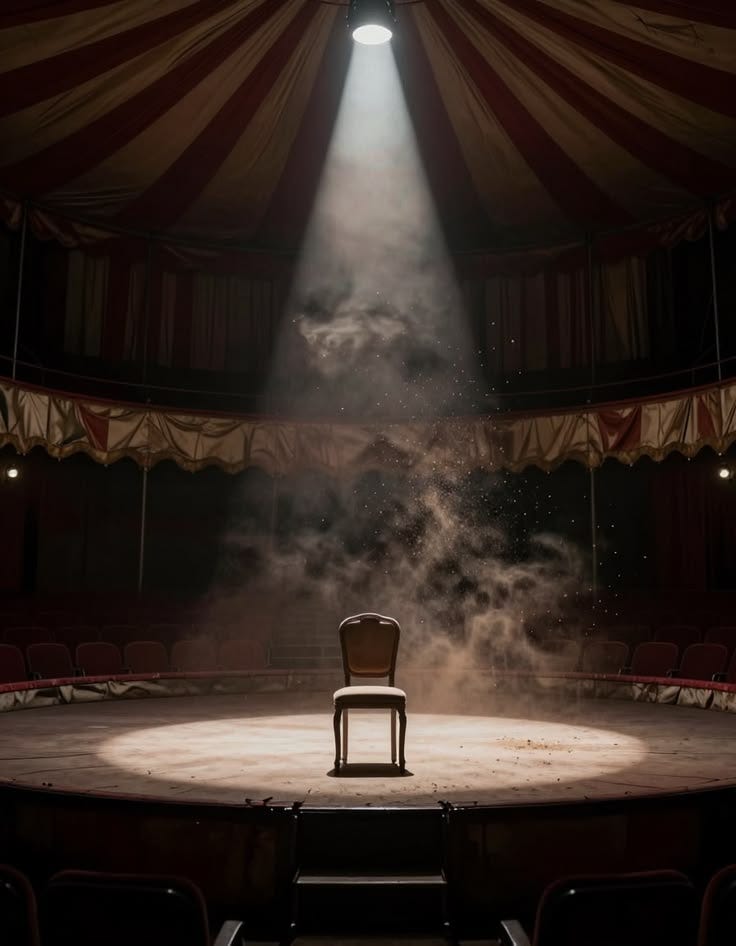
There is a particular kind of knowledge that has never been written down, not because the people who carry it are secretive or unwilling to share, but because the knowledge itself refuses the linear cage, it does not exist as information, it exists as practice. It is the accumulated result of ten thousand mornings on the same piece of land, as the specific way a hand turns soil that has been turned by the same family for generations, as the almost unconscious reading of light and moisture and the particular stillness that precedes a change in weather that no instrument has yet detected. It lives in the body of the person who has it. It is transferred, when it is transferred at all, through proximity and time and the kind of patient, unspectacular apprenticeship that the modern world has made almost impossible to justify, because the modern world measures the value of time in ways that make sitting beside an old farmer and learning to see what he sees look, by every available metric, like an inefficient use of it.
This knowledge is leaving the world whilst we sit in a trance.
I want to reach the part of you that already knows something is wrong.
Not the part that reads reports and tracks allocations and follows the conversation about technological transformation and the next decade of economic possibility, that part of you is well-served by the world as it currently presents itself, and I have nothing particularly new to offer it.
I want to reach the part that sits underneath that, the part that surfaces sometimes in quiet moments, in the gap between one distraction and the next, with a feeling that is not quite anxiety and not quite grief but something in the neighbourhood of both.
A sense that the world is moving very fast in a direction that is not quite right, that something important is being lost in the acceleration, that the things being gained, extraordinary as they are, are not quite the same kind of thing as the things being lost.
That feeling is accurate. It is not nostalgia, and it is not technophobia, and it does not require you to be against progress in order to take it seriously. It is the feeling of a person who is still connected, however tenuously, to a reality that the dominant conversation has stopped accounting for. Someone who stops at a sunset, feels the joy of a breeze and loves to know about the food they eat.
This piece is an attempt to name that reality, and to give it the weight it deserves.
Set the scene. If you are willing to try something, try this, go without food for a day, not as a fast or a cleanse or any kind of optimisation protocol, but simply as an act of attention, a deliberate withdrawal of the thing so that you can feel, with some precision, what its presence has always been doing for you. Drink water. Go about your day. And notice what happens not at the beginning, when it is still an intellectual exercise and the body has reserves enough to make the whole thing feel theoretical, but somewhere around the sixth or eighth hour, when the abstraction begins to thin and something older and more honest starts to come through.
A clarity that is not available by any other means, a reordering of priorities that happens not as a decision but as a revelation, a sudden and completely unambiguous understanding of what is foundational and what is not.
The affluent world has worked very hard, and with considerable success, to ensure that this feeling is never necessary. That hunger remains a concept rather than an experience, something that happens elsewhere, to other people, in circumstances so far removed from daily life that they require a charity appeal to make them visible.
We have succeeded so completely in this project that we have also succeeded in removing ourselves from the most basic and clarifying fact of our existence, which is that the body requires food, that food requires a living system capable of producing it reliably across time, and that the living system requires something that cannot be engineered or automated or optimised into existence, something that can only be built the slow way, through the unbroken continuity of human tending across generations.
That continuity is what is breaking now.
The farmers who planted the long-cycle crops; the coconut palms and olive groves and fruit orchards and mixed smallholder systems that operate on biological timelines measured in decades and sometimes in centuries. They planted them in a world where the question of who would tend them next was not a question that needed to be asked, because the answer was woven into the structure of how communities reproduced themselves across time. The land was tended because the land had always been tended, because the alternative was not an alternative at all but simply the end of the thing, and no one was prepared to contemplate the end of the thing because the thing was life itself and life, by its nature, finds ways to continue.
What has changed is not the land, and not the crops, and not the biological requirements of the living systems that produce food. Those remain exactly as they have always been, indifferent to our timelines, our preferences and our extraordinary technological capabilities. They are still operating on the ancient, unhurried clock of growth and maturity and decline that preceded human civilisation and will outlast it.
What has changed is the world surrounding the farm, which has filled so completely with alternatives, screens and cities and the particular kind of aspiration that the modern economy produces and rewards. The children of farmers are leaving their inheritance, not in desperation but in hope, not fleeing poverty but pursuing the life that every image and signal and incentive structure around them says is the real one, the valuable one, the one worth having.
And as they leave, one by one, season by season, village by village, without drama or declaration or any single moment that constitutes a crisis, the knowledge that lived in their parents’ hands begins its quiet disappearance. The crops that were planted on the assumption of their return continue to grow, because crops do not know about the disruption of the plan that was made for them, and when they reach the moment of peak maturity and the hands that should be there to receive that maturity are not there.
The decline that follows is not a crisis in the way that crises are usually understood. It is not sudden, it does not generate a headline, it does not trigger a policy response or a reallocation of capital.
It is simply the biological consequence of a break in the thread that was supposed to hold.
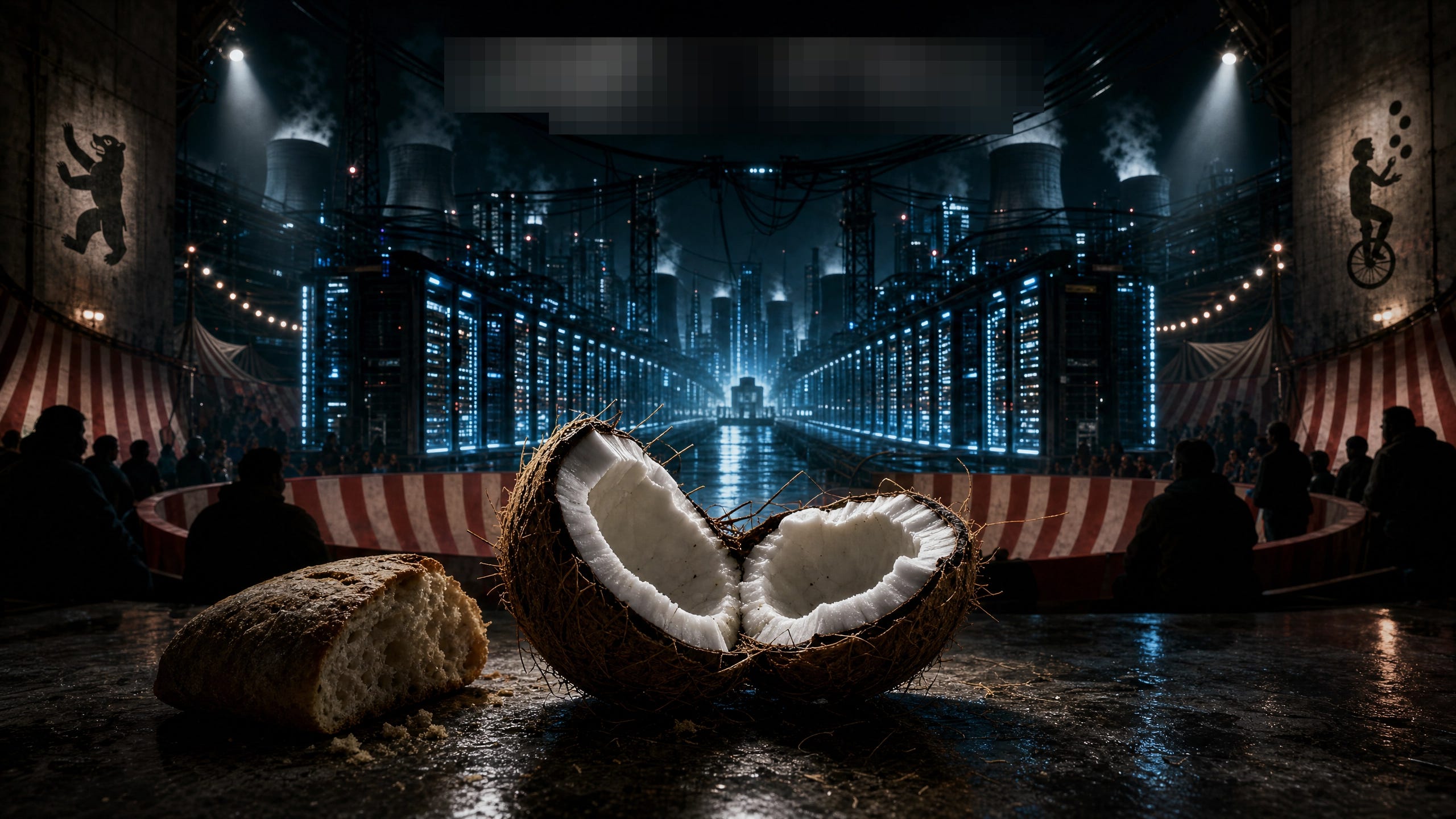
We cannot live on electrons.
This seems obvious enough that it barely requires saying, and yet the entire architecture of the world’s current ambition is organised in ways both conscious and unconscious around a forgetting of it.
Around the implicit assumption that the digital layer has become so fundamental, so wealth-generating, so genuinely transformative of the conditions of human life, that it has in some sense superseded the biological layer beneath it, that the infrastructure of data and computation and artificial intelligence that is being built at extraordinary speed and extraordinary cost represents a new foundation for civilisation rather than what it actually is, which is an extraordinary elaboration built on top of the old foundation;
Soil
Water
Biological Knowledge
Of how to tend living systems across time, and the unbroken human thread that carries that knowledge from one generation to the next.
The data centre is a remarkable thing, genuinely remarkable, and the ambition behind it deserves to be taken seriously on its own terms, but the data centre exists inside a world, and the world has a food system, and the food system is currently operating under pressures that receive almost none of the attention and almost none of the capital that are being directed at the technological transformation happening around it and on top of it and in many cases literally on the land that used to grow food instead.
The engineers who build and operate these systems are human beings with bodies, and those bodies require food, and that food requires a living system capable of producing it reliably not just today but across the decades-long horizon over which the data centre itself is expected to operate, and no one in the room where these investments are being planned is asking, with any seriousness or any urgency, whether that living system is in a condition to do what is being assumed of it.
The world is seventy percent dependent on seven crops.
Threaded through supply chains that have demonstrated, with uncomfortable clarity on several recent occasions, precisely how quickly they fail when the conditions sustaining them are disturbed. Their rotts are grown on soil that has been subjected to decades of chemical intensification in the name of yield optimisation, tended by a workforce that is older and smaller than it was and not being replaced at anything approaching the rate required, and underpinned by a body of accumulated human knowledge that is leaving the world at exactly the moment when the biological systems that depend on it are entering the most demanding phase of their productive lives.
This is not a distant or theoretical problem.
It is a present and structural one, unfolding now, in real places, in the lives of real farming communities, in the ageing of orchards and the exhaustion of soils and the departure of the young from the villages where the knowledge lives, and it will resolve itself as biological problems always resolve themselves, without reference to our preferences or our timelines.
This will be done in ways that will be completely obvious in retrospect and are, right now, almost entirely invisible to the people and the institutions with the capacity to do something about them.
The reason they are invisible is not stupidity, and it is not malice. However, it is worth being precise about this.
The lazy and easy version of this argument is the version that blames the allocators and the technologists and the policymakers for their arrogance and distain. Too esay and I see it too often.
This misses the more important and more disturbing truth, which is that the blindness is structural, that it is the entirely predictable product of a civilisation that has optimised itself, over several generations, for a speed and a time horizon that are simply incompatible with the timescales on which biological systems operate.
A coconut palm takes seven years to reach meaningful yield and several decades to reach its full productive maturity. An olive tree does not find its real character until it is thirty years old and does not reach its full expression for a century. The orchards and groves and mixed farming systems that constitute the most resilient and most productive long-cycle food assets in the world were established by people who were thinking about their grandchildren, who understood without needing to articulate it that the purpose of planting was not the immediate return but the continuity.
Continuity - The unbroken thread of tending that transforms a seed into a system and a system into the kind of living infrastructure that quietly underpins the food security of entire regions across generations.
That generation did not think in quarters. They did not think in electoral cycles or fund horizons or the eighteen-month window that even the most patient institutional capital privately admits is where its real attention lives. They thought in tree cycles, which is to say they thought in the only timeframe that biological reality actually respects, and they built accordingly, and the things they built are still feeding people centuries later, which is perhaps the most eloquent argument available for the proposition that
the long view is not an indulgence but a necessity, not a luxury afforded by a simpler time but the only honest response to the nature of the problem.
We have lost that capacity almost entirely, and we have lost it not through any single decision or failure but through the accumulated pressure of a thousand incentive structures all pointing in the same direction, all rewarding the near term and penalising the long, all making it rational individually, institutionally and politically to think in cycles that are too short to encompass the biological reality on which everything else depends.
Bread and Circus
The phrase is two thousand years old and it has not required a single revision.
The Roman satirist who gave it to us was describing something he had observed with the kind of weary clarity that comes from watching a pattern repeat itself across enough iterations to understand that it is not an accident but a design.
The combination of food and entertainment is not merely a fortunate coincidence for those in power but a deliberate and remarkably effective technology for the management of populations, for the direction of collective attention away from the questions that might be inconvenient and toward the spectacle that keeps those questions from surfacing with any force or persistence.
The circus we have built is beyond anything the Romans could have imagined. The i-Circus is available in every hand, at every moment, infinitely varied, exquisitely calibrated to the specific preferences and vulnerabilities of every individual user, capable of sustaining attention across entire lifetimes without ever quite satisfying the hunger it continuously stimulates, which is of course the point. A satisfied hunger does not return, and the business model requires return.
However, it has been built, this extraordinary apparatus of attention capture, on the assumption that the bread is handled, that the food system is a solved problem, that the biological foundation beneath the digital superstructure is stable and will remain so, that we can safely direct all of our ingenuity and ambition and capital toward the elaboration of the circus because the bread will simply continue to be there. Until now it has always been there, as it believed it will always be there on the presumption (unquestioned) because it has always been there and the alternative is not something we have learned to think about seriously.
The alternative is something we are going to have to think about seriously.
This message os for the very, very few who sees this clearly.
Who looks at this moment and asks not where the next cycle’s return is coming from but where the food is coming from in ten years, and in twenty, and who is willing to think and act on the timescale that biological reality actually requires rather than the timescale that quarterly reporting rewards. For that person is not simply making a sound investment in the conventional sense, though it is also that, perhaps the most asymmetric long-horizon bet available in the world right now, in a world where almost all of the capital is pointed elsewhere and the supply problem has not yet resolved itself into the kind of visible crisis that moves institutional money.
They are doing something older than investment. They are becoming part of the continuity.
They are taking the place, in the long chain of human tending that has always been the real foundation of civilisation, of the person who was supposed to be there and isn’t, who left for the city or the screen or the thousand other things the modern world offered that the farm could not compete with. In taking that place, with capital, attention and the willingness to think on a timeline that the dominant culture has made deeply unfashionable they are participating in the only project that has ever actually mattered.
The project of ensuring that the thread does not break, that the knowledge does not disappear entirely, that the living systems on which everything else depends are tended by human hands and human intelligence across the decades required for them to do what they do.
The world was always built by people who planted things they would not live to fully harvest, and it will only continue to be built by such people.
The question of whether you are among them is one that only you can answer, and the window in which the answer still makes a material difference is not as wide as it was, and is narrowing with every season that passes without the right people paying attention.
This piece will be worth more in ten years than it is today, not because of anything in the writing but because of everything in the world. Because the reality described here will by then have made itself felt in ways that are no longer abstract, a matter of projection or argument or something that requires a long essay to establish because it will simply be visible.
Reality will gain proximity in the food prices and the supply disruptions and the slow, unmistakable consequences of a break in continuity that was entirely foreseeable and almost entirely unforeseen, because the people with the capacity to foresee it were watching something else.
Uncork it then, in that world, and read it again with the knowledge of what the intervening years have brought, and ask yourself (not with guilt, which is useless) with the honest curiosity of a person trying to understand their own choices;
where your attention was, and
where your capital was, and
what you were doing during the years when it was still possible to plant something and have it matter.
The circus is very good. It has never been better, but it was always the bread that held everything together.
The bread has always required, and will always require, the one thing that no amount of technological sophistication has ever been able to replace, which is a human being who knows the land, and tends it, and teaches someone else to do the same.